
Path of Exile 2 Crafting: Why Simple Gear Fixes Feel Complicated
Understand crafting friction, material bottlenecks, and practical ways to approach upgrades.
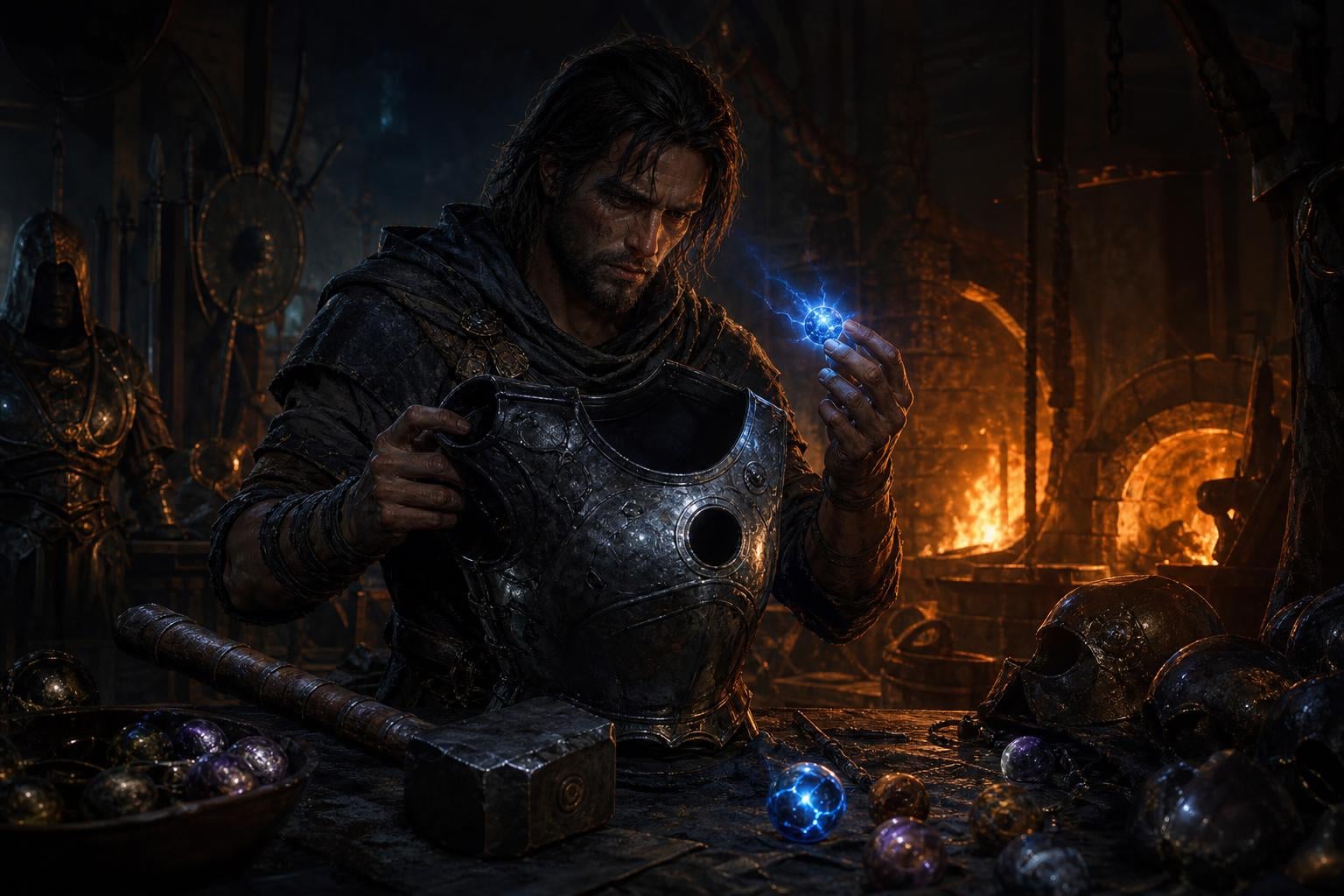
Overview
Path of Exile 2 offers several ways to improve equipment, but having more tools does not always make a simple upgrade easier. Learn why runes, socket requirements, specialised materials, and uncertain crafting outcomes can complicate progression—and how to make better decisions before committing valuable resources.
The Central Problem: More Options, More Dependencies
The strongest criticism of the crafting system is not that it lacks possibilities. It is that a modest objective can require several separate resources, each with its own acquisition method and restrictions. Fixing one resistance gap is a straightforward goal; identifying the right item, socket, and material can turn it into a much larger task.
That distinction matters. Depth comes from meaningful decisions; friction comes from prerequisites that delay those decisions. A system can offer satisfying endgame optimisation while still making basic campaign repairs unnecessarily awkward.
The number of crafting materials alone does not prove that a system is too complicated. More useful questions are whether players understand each material's purpose, whether tools overlap confusingly, and whether the resources needed for ordinary upgrades arrive when those upgrades matter.
Runes and Equipment Sockets Add Another Layer
Skill gems sit outside equipment sockets, allowing gear sockets to serve a separate purpose through socketable items. Runes and Soul Cores therefore provide another route to improving equipment without relying entirely on its existing modifiers.
This creates useful flexibility, but that flexibility has conditions. A player must have suitable equipment, available socket capacity, and a compatible socketable that addresses the actual problem.
Why a Small Resistance Fix Can Become a Project
Consider a character struggling against lightning damage. The desired outcome is clear: improve lightning resistance without sacrificing too much elsewhere. A socket-based solution may require several checks:
- Find equipment worth retaining through the next stretch of progression.
- Check whether it has an available equipment socket.
- Determine whether an Artificer's Orb can add the required socket.
- Obtain a suitable resistance rune.
- Compare the result against replacing the item outright.
None of these steps is inherently unreasonable. The problem appears when several requirements are missing simultaneously. Possessing the correct rune does little for an item that cannot accept it, while socket capacity alone does not supply the missing resistance.
Equipment sockets also serve a different purpose from support gem sockets. Artificer's Orbs concern equipment sockets; Lesser, Greater and Perfect Jeweller's Orbs add support gem sockets to skills. Understanding that distinction prevents an early and potentially costly misunderstanding.
Crafting Materials Can Increase Knowledge Costs
Specialised materials can make crafting more interesting by giving players additional control. Essences, Omens, and other crafting tools create decisions beyond simply applying a basic orb and accepting the result.
However, control and simplicity are not interchangeable. A material may improve a particular operation while also requiring players to learn another interaction, acquire another resource, and evaluate another opportunity cost.
Basic Tools and Advanced Tools Need Different Roles
A clear progression system should make the boundary between ordinary repairs and ambitious projects easy to understand. Adding a missing defensive stat should not demand the same research burden as pursuing an exceptional endgame item.
When those boundaries blur, players may hoard materials because they cannot judge their value. Others spend scarce resources on equipment they will soon replace. Both behaviours reflect uncertainty rather than an engaging crafting choice.
For anyone managing a Path of Exile 2 currency reserve, the practical lesson is to identify the intended improvement before choosing the tool. Start with the problem, not with an unfamiliar item in the stash.
Uncertain Outcomes Make Failed Attempts Feel Expensive
A crafting attempt costs more than the orb consumed. It can also consume the usefulness of a promising base, the time spent finding it, and the resources already invested in earlier steps.
That does not mean every unfavourable result permanently destroys an item. It means recovery may be limited, expensive, or unsuitable for the project's budget. An item can remain usable while no longer being worth further investment.
An Exalted Orb adds a modifier, but it does not guarantee the particular modifier a build needs. Additional crafting control can improve a process without eliminating its uncertainty.
Take a look at: campaign gear checks and safer progression
Set a Stopping Point Before Starting
- Define success: Decide which improvement would make the item useful.
- Check the base: Confirm that its requirements and existing modifiers suit the character.
- Limit spending: Choose how much investment a temporary item deserves.
- Plan for failure: Decide whether an unwanted result means using, selling, storing, or abandoning it.
This approach reduces the temptation to keep spending simply because earlier attempts were expensive. Previous investment does not make the next random outcome more favourable.

Campaign Progression Exposes Material Bottlenecks
During the campaign, equipment changes frequently and resource reserves are limited. A material that seems ordinary after extended endgame farming may be unavailable when a new character first needs it.
This creates a timing problem. An upgrade system can be generous across an entire character's lifetime yet still provide an awkward experience at a specific boss or progression checkpoint.
The useful question is not merely whether a resource drops. It is whether players can access a reasonable solution when a basic defensive or offensive shortfall begins blocking progress.
Before committing resources, distinguish between a genuine equipment problem and a combat problem. Better resistance may help against elemental damage, but it does not replace learning dangerous attacks. Likewise, an expensive weapon project may be unnecessary if a simpler replacement already provides enough damage.
Trade and Solo Self-Found Experience Different Friction
Trade Can Replace Several Acquisition Steps
Trading allows players to exchange resources they have for equipment or materials they need. This can bypass the requirement to find a particular crafting component personally.
However, that convenience changes the decision rather than removing it. Players must compare the cost of a finished item against the combined cost and uncertainty of crafting an equivalent upgrade.
A Divine Orb is a high-value trade currency, not a sensible default budget for every equipment problem. When allocating PoE 2 currency, consider how long the upgrade is likely to remain useful and whether it resolves an immediate progression barrier.
Solo Self-Found Makes Availability More Important
Without trading, the materials available to a character define its practical options. A theoretically excellent crafting route offers little help if its required components have not appeared.
This makes flexible gearing especially valuable. Keeping alternative equipment with useful defensive modifiers can create solutions that do not depend on a specific rune or crafting sequence.
There is also a broader design tension: specialised rewards can make different activities meaningful, but spreading essential tools across too many activities risks turning variety into obligation. Basic progression benefits from several workable solutions rather than one narrow acquisition route.
Take a look at: understanding deaths before changing your build
What a Clearer Crafting System Should Achieve
Improvement does not require removing powerful crafting tools or making exceptional items effortless to obtain. The more useful goal is separating accessible repairs from advanced optimisation.
- Readable purposes: Players should understand what a material does and when it is relevant.
- Accessible basic fixes: Ordinary resistance and damage problems should have understandable solutions.
- Proportionate risk: Temporary equipment should not demand excessive commitment.
- Meaningful specialisation: Advanced tools should add interesting choices rather than duplicate prerequisites.
- Clear recovery options: Players should understand what an unfavourable outcome leaves them able to do.
These are design goals, not announced changes. They provide a useful framework for judging whether additional materials expand crafting depth or merely increase the preparation needed to attempt an upgrade.
Frequently Asked Questions
Why can a simple resistance upgrade require several items?
A socket-based solution needs compatible equipment, socket capacity, and the appropriate rune. Missing any one component can delay the upgrade.
Do more crafting materials automatically make the system better?
No. Additional materials add value when they create understandable, meaningful choices. They can also increase acquisition requirements and learning costs.
Should campaign equipment receive expensive crafting investment?
Usually, investment should match the item's expected lifespan. Prioritise affordable improvements that solve an immediate problem before pursuing ambitious results.
Is buying finished equipment always better than crafting?
No. Compare available items against the cost, uncertainty, and usefulness of a crafting attempt. In Solo Self-Found, make the same comparison using available drops and materials instead of trade listings.
What is the safest way to approach an uncertain craft?
Define the desired result, set a spending limit, and decide what to do after an unwanted outcome before consuming resources.