
Path of Exile Beast Locking Guide: Crafting a Strength-Stacking Rex Talisman
Learn to preview multiple influence combinations, secure attribute suffixes, and protect your investment while crafting prefixes.
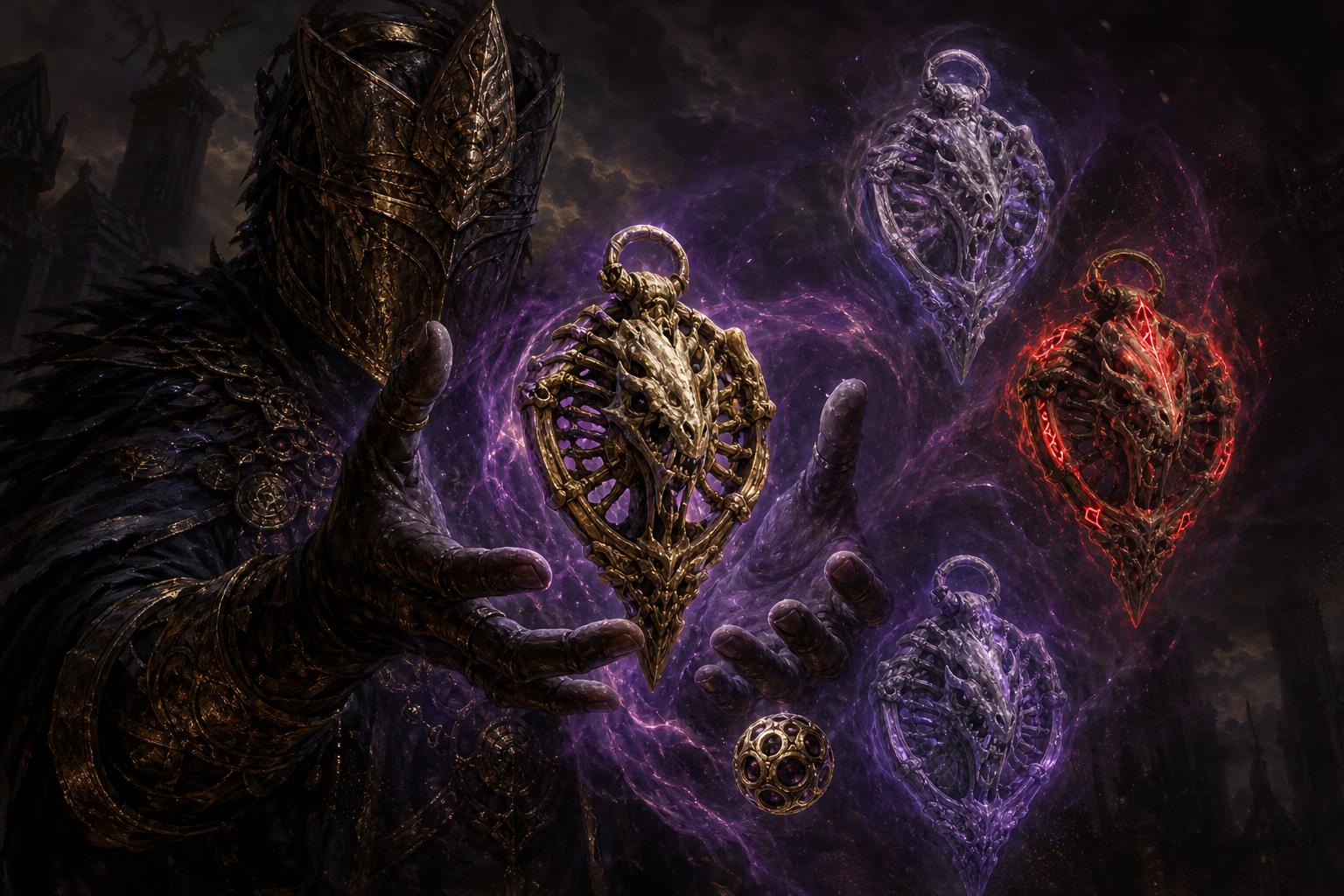
Overview
Beast locking lets you inspect an Awakener's Orb combination before committing valuable crafting materials. Combined with strands and a carefully chosen collection of donor amulets, it offers a controlled way to pursue a double-influenced Rex Talisman with strong attribute suffixes.
This guide explains how to prepare the recipient, compare multiple outcomes under one lock, and use talisman imprints to improve prefixes without abandoning completed suffixes. The example targets increased Strength, increased Attributes, and a high-tier flat Strength roll.
How the Craft Works
The process has three distinct stages: prepare a magic influenced talisman, preview influence combinations until the suffixes are worth keeping, then develop the prefixes using imprints as a recovery point.
Strands improve the quality of the modifier tiers generated during this process. Preserving them through preparation matters because the eventual Awakener's Orb combination can otherwise produce desirable influence modifiers alongside disappointing ordinary affixes.
The central efficiency gain is checking different donor configurations under the same lock. Buying many copies of an identical donor does not necessarily provide more distinct previews. Differences in the number and arrangement of influenced modifiers are what make a varied donor collection useful.
Prepare the Recipient and Crafting Materials
Choose the influence around your goal
For a dedicated Strength-stacking amulet, begin with a Warlord-influenced recipient and target increased Strength. Shaper donor amulets supply increased Attributes.
Starting with increased Attributes instead offers more flexibility when crafting for resale. A collection of Warlord, Redeemer, and Crusader donors can support Strength, Dexterity, and Intelligence outcomes respectively. That broader approach lets a strong attribute roll become a useful result even when it does not suit one specific character.
Gather materials before beginning
- A suitable influenced Rex Talisman recipient and strands.
- Fundamental Fossils or access to appropriate Harvest reforges.
- Orbs of Annulment, a Regal Orb, and benchcrafting resources.
- An Awakener's Orb and a varied collection of influenced donor amulets.
- Craicic Chimeral and Black Mórrigan beasts for the magic-item lock recipe.
- Fenumal Plagued Arachnid beasts for rare-talisman imprints during prefix crafting.
Keep a separate reserve of Path of Exile currency for recovery attempts. The price of the recipient is only part of the budget: donor variety, repeated beastcrafts, and prefix restoration all contribute to the finished item's cost.
Build the Magic Base Without Wasting Strands
Begin with a scoured recipient and apply strands. A count in the region of 40–60 is a workable starting point for this approach; chasing a perfect initial count is not the main objective.
Use a benchcrafted modifier to make the normal item magic without spending strands on that step. Then apply a Regal Orb to make it rare for reforging. The regal can consume strands, so a valuable starting state may justify making a magic-item imprint first and restoring it if the loss is unacceptable.
Roll and isolate increased Strength
Use Fundamental Fossils or Harvest reforges to search for increased Strength. These methods preserve strands during the rolling stage described here. Compare fossil and resonator costs against the required lifeforce rather than assuming one route is always cheaper.
Once increased Strength appears, remove every other suffix with Orbs of Annulment. Losing the desired modifier means returning to the rolling stage. An ordinary benchcrafted modifier does not protect increased Strength from an annulment; it merely adds another modifier that could be removed.
When increased Strength is the only suffix, use the appropriate suffix-protection benchcraft and an Orb of Scouring to clear the prefixes while preserving it. The intended result is a magic recipient with the desired influenced suffix and strands remaining.
Check the item's rarity and modifier layout before proceeding. The beast-lock recipe used for the next stage requires a magic item.
Preview Multiple Awakener's Orb Outcomes
Apply the beast lock
Use the magic-item lock beastcraft to apply the Hinekora's Lock effect. This allows inspection of the next applicable currency outcome before committing to it.
Preview the Awakener's Orb combination with a donor, making certain that the prepared talisman remains the recipient. Inspect the complete result: which influenced modifier transfers, which additional affixes appear, and how many strands remain.
Why donor variety matters
A collection containing only increased Attributes donors with the same influenced-modifier structure can repeatedly show the same result. A more useful collection includes different configurations:
- A donor with increased Attributes as its only influenced modifier.
- Donors with increased Attributes and another influenced suffix.
- Donors pairing increased Attributes with an influenced prefix.
- Donors carrying three or more influenced modifiers.
These configurations can expose different outcomes under one lock. They do not guarantee a unique result for every donor, and an outcome may transfer the wrong influenced modifier.
That distinction is important. A preview with excellent flat Strength but the wrong transferred modifier is not automatically usable. Another donor configuration may select increased Attributes while producing an otherwise desirable result, so finish checking the collection before discarding the lock.

Reset only after checking the collection
If none of the previews meets the target, change the recipient with an appropriate benchcraft to remove the lock, then prepare it for another beast-lock attempt. Repeat the comparison process with the donor collection.
This is where disciplined use of PoE orbs matters most: preview first, verify the transferred modifiers, and only consume the Awakener's Orb when the entire outcome is acceptable.
Choose an Outcome Worth Keeping
For the Strength-stacking example, the primary target is three strong suffixes: increased Strength, increased Attributes, and high-tier flat Strength. Strong all-attribute rolls may also be worth considering, depending on the build.
Do not evaluate suffixes in isolation. Two previews with similar suffixes can leave very different amounts of strands for later crafting. More remaining strands can make the prefix stage more attractive, while useful existing prefixes may reduce how much finishing work is necessary.
Set an acceptance threshold before repeated attempts. A personal-use craft should prioritize the character's actual needs; a resale project can justify keeping strong Dexterity or Intelligence combinations if the recipient and donors support them. Neither approach guarantees profit.
Use Talisman Imprints to Develop the Prefixes
Clear unwanted prefixes
Once the suffixes are complete, the Fenumal Plagued Arachnid rare-talisman imprint recipe provides a recovery point. Make an imprint before attempting to annul an unwanted prefix. If a valuable suffix disappears, restore the item and make another imprint before trying again.
For an item with three desired suffixes and one unwanted prefix, an unprotected annulment has a one-in-four chance of removing that prefix. That is an average probability, not a promise that four attempts will succeed.
Compare the expected cost of beasts and annulments with suffix protection followed by scouring. Beast prices fluctuate, and a cheaper individual attempt does not necessarily mean a cheaper completed cleanup.
Include suffix protection in the recovery state
After clearing the unwanted prefixes, craft Suffixes Cannot Be Changed and then create a fresh talisman imprint. The saved state now includes the metacraft, so restoring that imprint also restores the protection already paid for.
From this checkpoint, use Exalted Orbs to add prefixes or an appropriate Harvest reforge to pursue a useful modifier category. For this example, desirable results include flat life, increased Energy Shield, or damage scaling with Strength.
Respect each action's interaction with the item. Adding a modifier needs an available slot, while a reforge can consume the protective craft and fill available prefixes. Inspect the result after every operation rather than assuming the previous protection remains active.
If the result is poor, restore the checkpoint. If the item improves, consider making a new imprint before risking further changes. This turns prefix crafting into a sequence of protected decisions rather than an uninterrupted gamble.
Common Mistakes to Avoid
- Collecting identical donors: identical influence structures may offer no additional preview variety.
- Accepting the wrong transferred modifier: attractive extra affixes do not replace the required influence combination.
- Ignoring remaining strands: the suffix result and future prefix potential both matter.
- Annulment without a recovery plan: completed suffixes are too valuable to risk casually.
- Treating an old imprint as a new checkpoint: restoring it returns the item to that saved state, not its latest improvement.
- Assuming fixed crafting costs: compare beast, lifeforce, fossil, and metacraft costs before choosing a route.
Frequently Asked Questions
Does every donor give a different Awakener's Orb preview?
No. Donors with the same influenced-modifier structure can repeat an outcome. Different modifier counts and prefix-suffix arrangements provide more useful variety.
Do strands guarantee top-tier affixes?
No. They improve the tier quality of generated affixes, but they do not guarantee the exact modifiers or tiers the build needs.
Is imprinting always cheaper than protecting suffixes and scouring?
No. Compare the cost of repeated imprint-and-annul attempts against the deterministic cleanup. Unlucky annulments can erase an apparent saving.
Why save an imprint after crafting Suffixes Cannot Be Changed?
The imprint preserves that paid benchcraft as part of the recovery state, allowing failed prefix attempts to return to a protected starting point.
Should a Strength-stacking craft keep a strong Intelligence result?
Only if the project allows a resale outcome or another character can use it. A dedicated personal upgrade should satisfy its original attribute requirements.