
Path of Exile 2 1.0 Preview: Castle Sieges, Crafting and Party Balance
Learn how army battles, territory control and early crafting fit into the launch plans—and what remains uncertain.
Overview
Path of Exile 2's 1.0 plans bring together army-building encounters, castle territory, campaign crafting and a broad balance pass. Here is how those systems are intended to work, what they mean for solo and party players, and which details remain development goals rather than confirmed changes.
Army Battles Built Around the Campaign
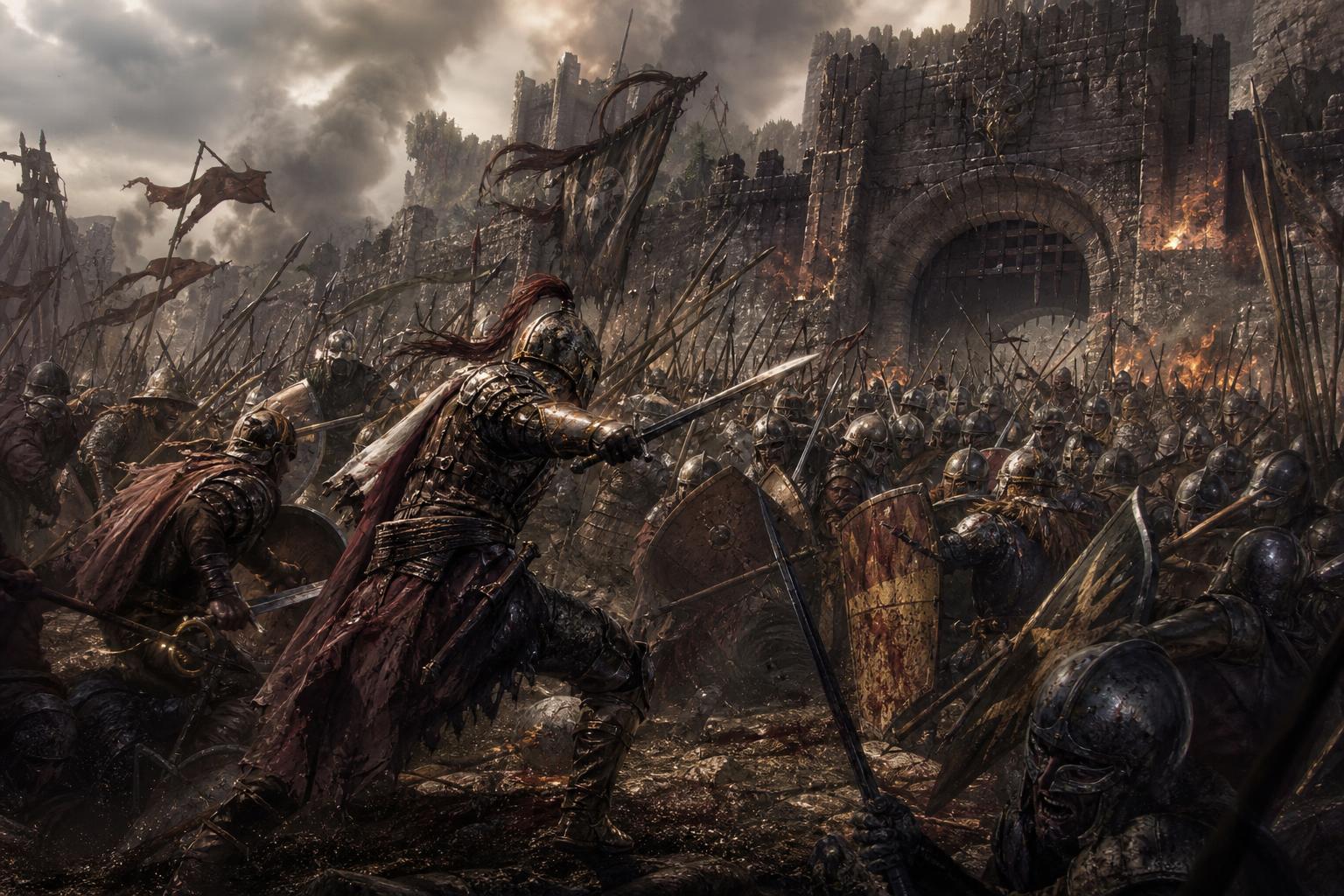
Grinding Gear Games wants the launch league mechanic to fit naturally into the campaign rather than interrupt its story. Building an army and attacking enemy positions provides a framework that can work across different acts: a prison siege fits an early confrontation, while later regions offer other enemy forces to challenge.
The intention is to give newcomers a mechanic that makes sense alongside their immediate objectives, while offering experienced players a distinct style of encounter. Instead of simply adding another pack of monsters, the system places the player within a larger battle involving allied and opposing troops.
How long do battles take?
Jonathan Rogers described the actual army clash as lasting roughly one or two minutes. However, that is not the entire encounter. There is also an additional area to clear, with its size varying by battlefield.
Castles are larger than some basic battlefields, and the overall expectation is that completing a battle encounter takes approximately as long as an ordinary map. Players should therefore distinguish between the short central clash and the full activity surrounding it.
- Main battle: A relatively short confrontation with both armies fighting simultaneously.
- Additional area: Extra combat space that extends the encounter beyond the initial clash.
- Area modifiers: Battle areas are opened using a map item, and their modifiers affect the monsters involved.
Castle Territory Changes Battle Difficulty
Castle strength is designed to shift according to neighboring territory. After a castle is captured, it is initially difficult for an opposing faction to retake. Nearby enemy castles then apply siege pressure over time, gradually reducing the defending troop strength.
Capturing the adjacent hostile castle can remove that pressure, allowing troop numbers to recover. This creates a distinction between a well-protected territorial core and a contested frontier.
The practical implication is that location matters alongside immediate rewards. A castle surrounded by friendly holdings should behave differently from an isolated position beside enemy territory. Taking another stronghold can change the difficulty of nearby battles rather than merely adding one more completed encounter.
Troop numbers and battlefield limits
Difficulty is tied to army strength, but the system does not increase the number of visible combatants indefinitely. Rogers described a limit of around a thousand troops on the battlefield. Beyond that point, additional strength is represented by making existing troops more powerful and tougher.
The battles required a custom simulation and substantial optimization. Early internal performance problems explain that engineering work, but they do not establish how the finished encounters will perform for players. Launch performance cannot be reliably predicted from an early development example.
Your Character Still Fights Alongside the Army
Army management does not replace direct character combat. Players can attack enemy soldiers themselves, and sufficiently strong builds may destroy large numbers of them.
However, the encounter design discourages ignoring allied troops entirely. Charging into a concentrated enemy army without support exposes the player to many simultaneous attacks. With roughly 70 troop types described, battlefield threats are also intended to vary substantially.
The useful distinction is between contributing heavily and bypassing the mechanic. A powerful character can play a decisive role, but allied forces are intended to help absorb pressure and make the engagement manageable.
Crimson Iron Crafting Starts During the Campaign
Crimson Iron crafting materials are intended to appear during campaign progression, with rewards coming from battle treasuries. The lower-level versions are designed as accessible crafting resources rather than items that players should automatically save for endgame.
The key restriction is item level. Early materials can only be used within particular item-level limits, giving players a reason to spend them while their equipment remains eligible.
- Check eligibility first: An early material may stop being useful once equipment exceeds its supported item-level range.
- Use progression resources for progression: Low-level materials are intended to help with equipment during the campaign.
- Do not assume equal availability: Higher-level versions are described as potentially much rarer.
This creates a useful distinction from broadly traded Path of Exile 2 currency. A restricted campaign material should be evaluated by the upgrade it can provide while it is usable, not simply by the possibility of saving it indefinitely. No exact drop rates or complete crafting outcomes have been established here.
Take a look at: the planned Warrior changes and character balance adjustments
Party Experience and Solo Farming Remain Balancing Challenges

Why damage requirements are not a simple solution
Grinding Gear Games has considered requiring damage contribution before a player receives experience. The problem is that legitimate support builds may contribute without dealing meaningful damage themselves.
For that reason, nearby party members receiving experience remains part of the intended multiplayer structure. Passive participation is not automatically equivalent to cheating, and a blanket damage check could punish cooperative play.
The stated enforcement approach focuses on detecting prohibited behavior and banning offenders. Rogers also emphasized that claims about widespread undetected cheating can exaggerate its prevalence. That does not mean every party-related concern has been resolved; it means enforcement and legitimate party design must be treated separately.
When tablets become too valuable to use alone
A separate concern involves endgame tablets whose market value makes solo use feel inefficient compared with selling them or running them in a group. Grinding Gear Games acknowledges that this can create an unhealthy incentive.
Expedition was identified as a particular area of concern. However, a specific corrective change was not firmly confirmed for 1.0. The reliable takeaway is that the issue is recognized, not that solo and party returns have already been equalized.
For players managing a PoE 2 currency reserve, the practical decision remains whether an encounter's expected value justifies consuming its entry resource. The design goal is for party benefits not to make solo play feel economically inferior.
Build Balance Targets Variety and Endgame Viability
The launch balance pass is expected to include both nerfs and buffs. Rogers singled out Cast on Crit setups when discussing examples of excessive power, but did not provide enough detail to determine the exact scale or implementation of changes.
The broader target is to avoid a situation in which one build is so dominant that alternatives cannot reasonably compete. That is different from trying to make every build perform identically.
Warrior, maces and less popular options
Warrior and mace improvements are among the changes the team hopes players will enjoy. Less popular classes and mechanics are also part of the discussion, including Sorceress and infusions, although the comments do not guarantee that every weaker option receives a complete solution at launch.
Endgame viability is an important design test. A skill that feels effective against small campaign groups may struggle when encounter density and combat speed increase. The team is checking whether new options have a workable endgame use, while acknowledging that some older skills need further attention.
Rogers also named Shadow and traps as his intended personal choice. That indicates enthusiasm for the playstyle, not proof that traps will outperform daggers or become the strongest launch build. Investment decisions should follow actual mechanics and balance details rather than personal preference alone.
Take a look at: a beginner's introduction to combat, builds and loot
New Players Are Encouraged to Start Small
The advice for newcomers is deliberately straightforward: choose something appealing and learn through the campaign. Understanding every interaction before creating a character is not presented as a requirement.
Completing the campaign is a reasonable initial objective. Reaching pinnacle bosses on a first character is a different expectation, and needing more experience or another character before tackling those encounters is normal.
Guides can help solve specific problems, but they do not need to become compulsory preparation. Learning combat, recognizing useful equipment and understanding a chosen skill can happen gradually.
For the launch audience, Grinding Gear Games expects a substantial initial influx and a smaller returning audience afterward. That pattern is not being treated as incompatible with longer-term growth. Player-count ambitions remain ambitions, rather than guarantees about launch results.
Frequently Asked Questions
Can a strong build complete army battles without help?
Characters can kill enemy troops directly, but dense incoming attacks are intended to make allied support valuable. Completely ignoring the army system may be dangerous.
Should early Crimson Iron materials be saved for endgame?
Not automatically. Lower-level versions have item-level restrictions and are designed to be used during campaign progression.
Are party members required to deal damage to gain experience?
The discussed approach preserves nearby party experience because damage requirements could exclude legitimate support builds. Anti-cheating enforcement is a separate issue.
Are Cast on Crit nerfs fully detailed?
No. The setup was identified as an example of excessive power, but those comments do not establish exact numerical changes.
Have solo tablet rewards definitely been fixed?
No specific fix was firmly confirmed. The imbalance between solo use and party value was acknowledged as something requiring attention.