
Path of Exile 3.30: What an Endgame Overhaul Could Change
Understand the expected returning mechanics, farming concerns, and Atlas changes that could shape your next endgame strategy.
Overview
Path of Exile 3.30 is shaping up around a central question: how can the endgame offer more rewarding choices without making every farming strategy feel interchangeable? Returning mechanics, potential scarab adjustments, and concerns about ordinary monster drops all feed into that discussion. Here is what those possibilities could mean for mapping, investment, and character progression, with expectations kept separate from established mechanics.
The Main Focus: More Meaningful Endgame Choices
The most important expectation surrounding 3.30 is an endgame refresh. That matters beyond simply adding another encounter to maps. A successful overhaul would affect how players choose content, combine mechanics, and decide whether additional investment is worthwhile.
One recurring concern is the narrowing gap between basic farming and ambitious setups. When powerful strategies are reduced without enough improvement to less rewarding alternatives, expensive mapping can lose its appeal. Players still have different activities available, but fewer may feel worth building an entire character or Atlas strategy around.
The key distinction is between balancing the ceiling and improving the floor. Reducing exceptional returns can address outliers. Improving ordinary maps gives a broader range of characters a satisfying route toward upgrades. An endgame refresh could address both, but the precise balance remains something to assess through detailed changes rather than assume in advance.
Harbingers: A Return With Room for Reinvention
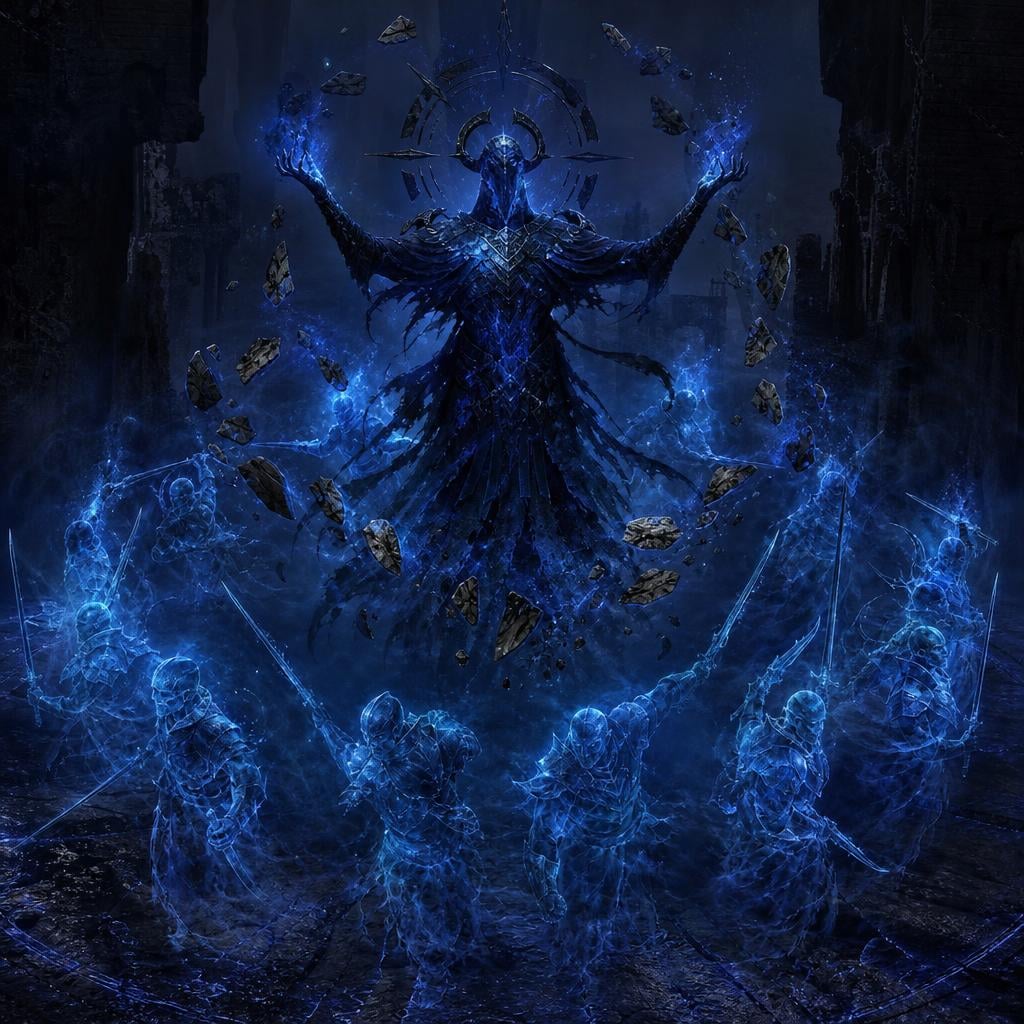
Harbingers are a major part of the expectations for 3.30. Their familiar identity is distinctive: blue, otherworldly enemies that summon monsters and reward players with currency shards. Their return could restore a recognizable mapping activity while offering an opportunity to revisit encounter presentation and pacing.
Several possibilities remain separate questions. Harbingers could return as an updated established mechanic, receive a larger narrative role, or become more closely connected to the expansion's main content. Those outcomes should not be treated as interchangeable or confirmed.
What Would Make the Encounters Worth Running?
For mapping builds, encounter duration matters alongside reward quality. An activity that requires waiting through repeated waves has to justify the time it adds to each map. Visual clarity also matters when summoned enemies overlap with other mechanics.
- Pacing: How long does an encounter take compared with simply continuing through the map?
- Readability: Can players identify threats while several groups of monsters are active?
- Rewards: Does the shard-based identity remain compelling relative to other activities?
- Investment: Are there worthwhile ways to specialize without making the basic encounter feel unrewarding?
Until the implementation is detailed, older Harbinger strategies are better treated as background knowledge than as ready-made plans for the expansion.
Mirage and the Challenge of Returning Mechanics
Mirage is another expected returning mechanic. Its potential significance comes from how strongly it could interact with the rest of a map, rather than merely adding an isolated encounter.
A mechanic that amplifies other content creates a difficult balancing problem. If players can access it reliably through a small Atlas investment, it may become an effectively compulsory choice. If access is less predictable, it can provide occasional high-value maps without determining every farming setup.
Random map appearances are one possible implementation, but neither a specific encounter chance nor an Atlas arrangement should be assumed. The important questions are how frequently Mirage appears, which rewards it affects, and what limits govern its interaction with other mechanics.
Why Implementation Matters More Than Familiarity
A returning mechanic does not necessarily retain its original power, availability, or reward structure. Integration into the broader game can change all three. Planning around an unchanged version risks overestimating both its value and its compatibility with other content.
For players managing a Path of Exile currency budget, the practical response is flexibility: establish a dependable mapping character first, then specialize once the interaction rules are clear.
Take a look at: a broader look at the 3.30 endgame plans
Ground Loot Versus Structured Rewards
Another major issue is the relationship between ordinary monster drops and rewards delivered through dedicated systems. Reward icons, encounter payouts, and similar structured rewards give players a clear reason to target particular activities. However, if those systems dominate too heavily, killing monsters outside them can feel incidental.
Improving ground loot would therefore have consequences beyond adding more items. It could make ordinary map clearing more satisfying and increase the value of mechanics that add monsters without offering a separate reward interface.
That does not mean every additional item improves the experience. Useful drops, readable loot filters, and manageable collection time all matter. More clutter is not the same as better rewards.
For farming comparisons, the useful measure remains the value of collected loot after costs and time. A strategy that produces impressive piles of items can still underperform if most of those items are not worth picking up or selling.
Scarabs Could Reshape Map Investment
Scarab changes could be among the most consequential parts of an endgame overhaul. Scarabs help determine what a map contains and how strongly a player commits to particular mechanics. Adjusting them can change established strategies even when the underlying encounters remain familiar.
The central concern is usefulness. A large selection is not automatically a meaningful selection if many options rarely justify their slot. A healthier system would give players reasons to compare combinations rather than repeatedly default to the same narrow group.
A smaller, stronger selection is one possible direction, not an announced outcome to build around. Changes could instead involve individual effects, availability, or interactions between mechanics.

How to Evaluate a Revised Scarab Setup
- Calculate the full consumable cost per map rather than considering each scarab separately.
- Check whether the build can complete the added content consistently.
- Measure clear time, including encounters that interrupt movement.
- Separate dependable returns from rare valuable drops.
- Compare the setup against a simpler alternative before increasing investment.
This approach keeps Chaos Orbs committed to productive upgrades rather than assumptions about how an old strategy should perform. A large Divine Orb reserve cannot compensate indefinitely for an inefficient farming loop.
Atlas Progression and Story Expectations
The Atlas of Worlds also has room for progression and usability improvements. Unlock requirements can create structure, but they can become frustrating when access to an activity depends on a connection that players have not yet discovered.
The useful design question is whether each restriction teaches progression or simply delays content the character could otherwise handle. Any changes should be judged by how clearly the Atlas communicates those requirements and how naturally players encounter them.
Further development involving Zana is another possibility surrounding the expansion. Story progression, however, should remain distinct from confirmed mechanical changes. A narrative tease does not establish new bosses, rewards, or unlock conditions.
Take a look at: evaluating scarab setups and map investment
Preparing Without Overcommitting
The safest preparation is to preserve options. Choose a starter that can handle ordinary mapping without requiring one untested interaction. Keep early upgrades focused on survivability, reliable damage, and comfortable clearing.
Once detailed information is available, reassess the Atlas passive tree, scarab combinations, and returning mechanics together. Their combined effects will matter more than any single headline. The strongest plan is not necessarily the most elaborate one; it is the one that remains effective after costs, encounter time, and failure risk are included.
Frequently Asked Questions
Will Harbingers be the main focus of 3.30?
Their return is a major expectation, but that does not establish them as the expansion's main antagonists or central league mechanic.
Should players plan around a specific Mirage encounter chance?
No. A proposed appearance rate is not a confirmed implementation. Wait for explicit details about access and interactions.
Would scarab changes invalidate existing farming strategies?
They could alter costs, combinations, or returns. Existing strategies need reassessment rather than automatic rejection or acceptance.
Does better ground loot mean every map becomes profitable?
No. Profit still depends on investment, completion speed, collected drops, and trade demand. Better baseline rewards would not remove those considerations.
