
Star Citizen Ship Outlook: Galaxy, Liberator and the Move Toward Fabrication
Understand the ships, support vehicles and fabrication possibilities worth watching—and which expectations still depend on speculation.
Overview
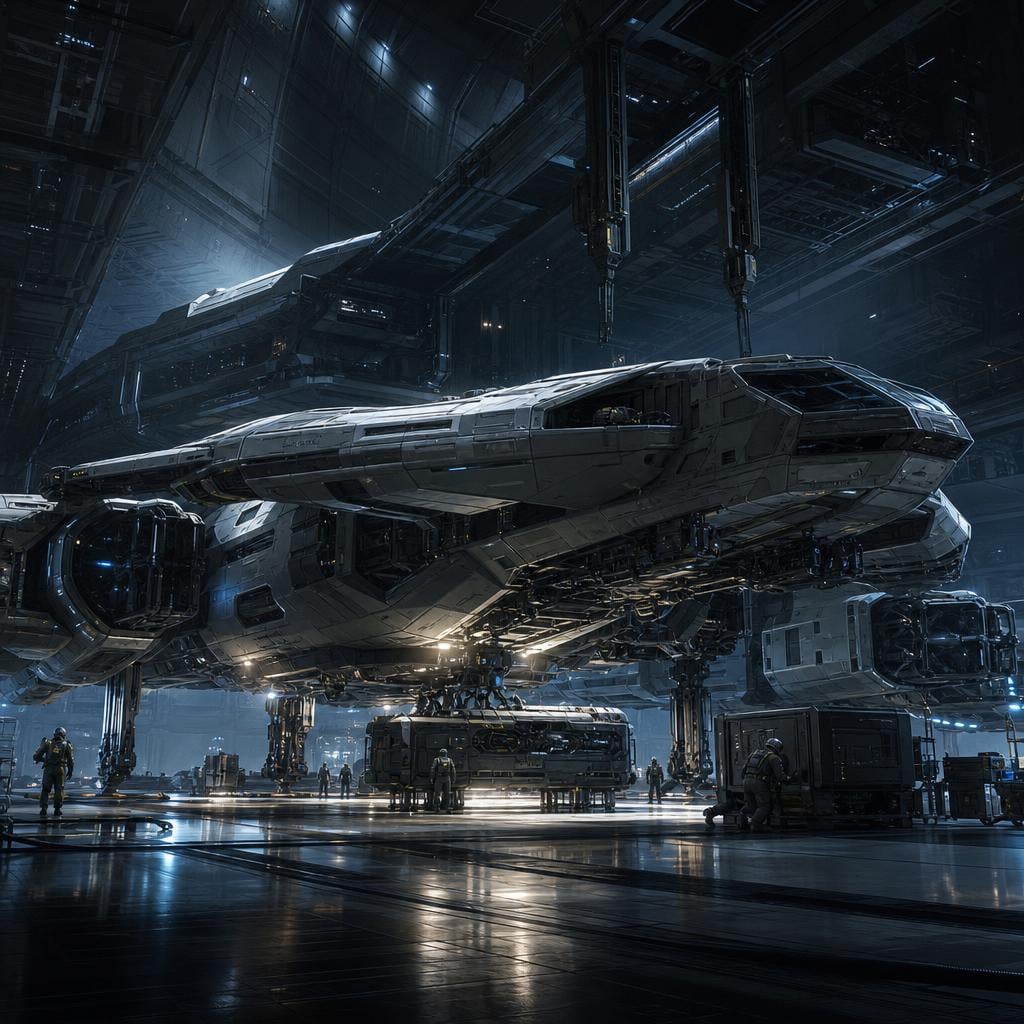
Star Citizen’s ship outlook stretches beyond larger hulls and heavier weapons. The RSI Galaxy, Anvil Liberator, proposed fabrication vehicles and possible upgrades to existing ships point toward a broader question: how will crews transport, support and sustain their operations? This overview explains their intended roles, the significance of production milestones and the release assumptions players should treat cautiously.
Ship Progress Is Not the Same as Release Confirmation
Production terminology can make an approaching ship sound closer to completion than it really is. Whitebox, greybox and LOD0 describe development work, not guarantees that a vehicle will arrive at a particular event.
Broadly, whitebox establishes layout and functionality, while greybox develops the ship’s structure and detail. LOD0 concerns its highest-detail assets, but lighting, damage work, audio, effects and bug fixing can still remain. Different areas may also advance at different speeds.
A late production milestone is a reason to watch a ship, not a release date. That distinction matters when discussing the Intergalactic Aerospace Expo, where expectations can run ahead of confirmed availability.
Constellation Updates Put Everyday Usability First
Discussion around the Constellation Mark V and cargo-focused Centaurus highlights improvements that matter beyond a specification sheet: airlocks, suit lockers, weapon racks and better access to the spaces crews use repeatedly.
These features affect how efficiently players prepare for missions, move equipment and transition between flying and surface activities. A ship’s practical value depends on more than its cargo capacity or weapon loadout.
The accompanying snub-fighter concept reinforces that approach. A small attached craft can provide a convenient way to explore nearby terrain without moving the mothership. However, docking compatibility, equipment access and the actual supported feature set should be checked before treating any particular pairing as essential to a fleet.
The broader lesson is straightforward: assess an updated ship by its usable interior and working systems, not simply by its generation label.
RSI Galaxy: Modularity With Important Dependencies
The Galaxy’s central appeal is its modular role. Rather than buying a large ship dedicated to one activity, a crew could configure the same platform around different operational needs.
Cargo, medical and refining roles sit at the heart of its concept. Base-building functionality also appears in discussions of its future, but expectations around that role require particular care: proposed capabilities and delivery plans can change.
Judge Each Module Separately
A modular hull does not automatically deliver every advertised profession when it becomes flyable. Each module needs its own implementation, and its usefulness depends on the supporting gameplay.
- Cargo: depends on practical loading access, usable storage and the missions available to the crew.
- Medical: depends on the facilities actually delivered and the treatment capabilities they support.
- Refining: requires the relevant processing mechanics, not merely an installed room.
- Construction: should not be assumed available without a clearly established implementation.
Concept figures suggest substantial cargo potential, but final capacity and layout should be assessed against the delivered ship. Likewise, comfortable accommodation does not eliminate the need to organize crew duties.
For players considering how to afford your first large ship in Star Citizen, the important calculation is operational usefulness. A flexible hull is only a sensible goal if its available modules support activities the crew actually intends to perform.
Anvil Liberator: Transporting a Fleet Rather Than Replacing It
The Liberator serves a different purpose. Its concept centers on carrying smaller spacecraft, ground vehicles and supplies, making it a transport platform for groups rather than a conventional combat flagship.
External landing pads and internal vehicle space are its defining attractions. In principle, that combination allows a group to relocate several specialized assets together instead of coordinating separate journeys for every pilot and driver.
Take a look at: IAE ship expectations and rumors to treat carefully
Low Flight Crew Does Not Mean Effortless Operations
The concept’s small operating crew is appealing, but flying the transport and running a complete deployment are different jobs. Loading vehicles, coordinating departures, protecting the ship and handling supplies all add work.
- Choose carried craft around the mission rather than filling every available space.
- Verify fit and clearance instead of assuming a small ship will be compatible.
- Allocate supplies alongside vehicles and equipment.
- Plan who remains responsible for the carrier during surface operations.
Its proposed cargo capacity could also support equipment and materials for extended outings. Pairing it with fabrication or construction assets is an attractive possibility, but the complete combination depends on those systems becoming usable.
Production progress makes the Liberator worth watching around major ship announcements. It does not establish a firm IAE or December release.
Auxilia and Greycat MFC: Fabrication on the Ground
The Auxilia and Greycat MFC are discussed as potential additions to a more self-sufficient surface fleet. Their appeal lies in bringing support capabilities closer to the players using them.
The Auxilia is associated with the Atlas platform family, alongside vehicles such as the Ballista, Centurion and Spartan. Its proposed combination of fabrication, medical support and transport space suggests a larger support vehicle for sustained excursions.
The MFC represents a more compact interpretation of mobile fabrication. A smaller vehicle could be easier to transport, but that alone does not establish its output, recipes or resource requirements.

Do Not Treat Planet Technology as a Vehicle Schedule
A connection between these vehicles and Genesis planet technology is plausible as a development theme, but it should not be treated as a confirmed shared release. More detailed terrain and longer surface activities could make support vehicles useful without requiring every associated feature to arrive together.
The practical questions remain how fabrication works, which resources it consumes and what players can produce. Until those details are established, avoid planning an entire expedition around assumed capabilities.
Unannounced Fighters and an Alien Generalist
Unannounced ship work invites especially confident guesses. A fighter progressing through development does not, by itself, establish its manufacturer, name or combat role.
Suggestions of a Drake heavy fighter, including the Marauder name, should therefore remain speculation. Production milestones cannot substitute for a reveal of its weapons, defenses or intended niche.
A possible Xi’an generalist is another intriguing prospect. A multipurpose alien ship could offer an alternative to familiar human designs, but “generalist” does not automatically mean it includes medical facilities, fabrication and substantial hauling capacity.
Manufacturer identity also matters. An alien designation is not enough to confirm a Gatac design, a Railen connection or a particular interior arrangement. The useful takeaway is the possibility of broader role diversity—not a dependable specification list.
Fabrication Could Add Value to Existing Ships
Potential fabrication functionality aboard the Clipper and Carrack deserves attention alongside new hull announcements. An existing ship gaining a working support system can change fleet planning without requiring players to replace it.
One possibility under discussion is fabrication drawing on materials carried aboard the ship. That could make storage useful beyond transporting saleable cargo, allowing crews to support activities while away from a landing zone.
However, recipes, material handling, production limits and the exact ships supported should not be inferred from the presence of a workstation or a proposed feature. Fabrication and base construction are also not interchangeable promises.
For an existing owner, the sensible approach is to evaluate the delivered functionality before funding another support vessel. Keeping a reserve of Star Citizen credits for equipment, supplies and operating expenses can be more useful than committing everything to an anticipated role.
Take a look at: planning ship purchases and upgrades efficiently
FAQ
Are the Galaxy and Liberator guaranteed for IAE?
No. Advanced production work can support expectations, but it does not confirm event availability or a release date.
Will the Galaxy launch with every module?
Do not assume so. The hull, individual modules and supporting gameplay can progress separately.
Can the Liberator support a solo operation?
Its small proposed flight crew is promising, but coordinating carried ships, vehicles and supplies creates responsibilities beyond piloting.
Are mobile fabrication recipes and costs established?
They should not be assumed from vehicle concepts or workstation appearances. Evaluate the implemented system before budgeting materials or expecting particular outputs.

Should players save for a new ship or improve an existing one?
Prioritize a working role you enjoy. Preserve aUEC for operating costs and useful equipment rather than spending solely around an unconfirmed feature.