
WoW Forever Weapon Speed Guide: Choosing Fast or Slow Weapons
Learn how weapon speed affects special attacks, threat, poisons, and training so you can judge upgrades beyond their swing timer.
Overview
Weapon speed affects more than how often your character attacks. In World of Warcraft Forever, it can change the value of weapon-based abilities, the responsiveness of tanking attacks, poison application, and even weapon skill training. Understanding those differences helps you choose upgrades without automatically dismissing every fast weapon.
The useful rule is not simply “slower is better.” It is match the weapon to the mechanic, then compare its overall quality. A slow weapon can deliver stronger individual special attacks, while a fast weapon may offer more frequent opportunities to trigger effects or spend resources.
What Weapon Speed Actually Changes
A weapon's speed describes the interval between its ordinary swings before attack-speed effects. A lower number means faster attacks; a higher number means longer gaps between hits.
Damage per swing and damage per second are different measurements. Among weapons with comparable DPS, a slower weapon generally deals more damage with each individual hit. A faster weapon distributes its damage across more attacks.
This distinction matters because abilities do not all use weapons in the same way. Before comparing two items, establish what your important attacks actually do.
- Weapon-damage attacks: These can benefit from the larger individual hits associated with slower weapons.
- Next-swing attacks: These wait for an ordinary melee swing, making weapon speed relevant to how quickly they activate.
- On-hit effects: Their relationship with speed depends on whether they use a fixed chance per hit or a speed-adjusted system.
- Training attacks: More frequent swings provide more opportunities to improve weapon skill.
Do not confuse a weapon's maximum listed damage with a guaranteed special-attack result. Damage ranges, attack power, and the ability's own calculation all matter. The practical advantage of a slow weapon is its larger damage per hit, not a promise that every ability rolls the highest possible number.
When Slow Weapons Make Sense
Special attacks based on weapon damage
Slow weapons are attractive when an ability converts weapon damage into an immediate attack. If two weapons have similar overall quality, the one with larger individual hits can produce stronger results from that ability.
Warrior Whirlwind and shaman Stormstrike illustrate why the distinction matters. Where an attack draws damage from both equipped weapons, both weapon slots deserve attention rather than treating the off-hand as an incidental stat item.
This does not mean equipping any slow weapon regardless of its quality. A substantial DPS upgrade can outweigh a preferred swing speed, especially while leveling. Compare the complete item rather than selecting whichever tooltip displays the longest interval.
Hunter ranged attacks and movement
Hunters also have reasons to value slower ranged weapons when their attacks scale with ranged weapon damage. Larger individual shots can support stronger weapon-based abilities.
A longer interval between automatic shots can also create a useful movement window. The basic pattern is to let a shot fire, reposition between shots, and be ready for the next attack. Movement timing still matters: a slow bow does not remove the need to respect the next shot.
Why Fast Weapons Can Help Warrior Tanks
Heroic Strike and Cleave are important examples of attacks that occur on the next melee swing rather than immediately when queued. A faster weapon brings that next swing around sooner.
For example, a weapon with a 1.5-second interval offers more frequent swing opportunities than one with a 2.9-second interval before other speed modifiers. That makes queued attacks more responsive and can let a warrior spend rage more rapidly.
Threat generation depends on available rage
Heroic Strike can turn that increased frequency into useful threat when enough rage is available. Cleave applies the same next-swing principle to situations involving additional enemies.
The limitation is resource supply. A faster weapon does not provide unlimited rage to fund every queued attack. Having more opportunities to use an ability only helps when the warrior can afford it without undermining other necessary actions.
- Consider a fast weapon when next-swing responsiveness and frequent rage spending are useful.
- Keep enough resources available for the rest of the tanking toolkit.
- Judge threat in the context of the pull rather than assuming faster swings always win.
- Do not use unusual, extremely high-resource situations as the model for ordinary dungeon combat.
Weapon choice is only one part of tanking preparation. A broader WoW Forever warrior leveling guide can help connect these decisions to talents, combat habits, and progression from 1–60.
Take a look at: WoW Forever warrior leveling guide
Paladin Seals Change the Comparison
Paladins should evaluate weapon speed alongside their active seal. Seal of Command is associated with the appeal of larger weapon hits, while Seal of Righteousness deserves consideration when using a faster weapon.
More frequent attacks mean more frequent occasions for Seal of Righteousness damage to occur. That can matter for both damage and threat, but frequency alone does not establish which seal produces the best result. Scaling, talents, equipment, and the weapon itself affect the comparison.
The practical leveling lesson is straightforward: do not vendor a strong fast two-hander just because a slower weapon is usually recommended. If it offers substantially better DPS than an aging alternative, evaluate it with an appropriate seal before rejecting the upgrade.
Conversely, do not assume changing seals makes every fast weapon superior. Compare actual combat performance, including resource use and kill consistency, rather than relying on speed alone.
Rogue Poisons and Other On-Hit Effects
A fixed chance per hit favors more application attempts
When an effect has a fixed chance to activate on each eligible hit, faster attacks provide more opportunities over time. This is the reasoning behind pairing a slower rogue main-hand with a faster off-hand.
The slower main-hand supports weapon-damage special attacks. The faster off-hand supplies frequent poison application attempts, which can help apply a slowing poison, build a stacking poison, or contribute additional damage.
Weapon type and talents still matter. A sword-focused setup should not discard its relevant talent interactions merely to equip a slightly faster dagger. Speed is one consideration within the build, not a replacement for it.
Normalized effects need different reasoning
Not every enchant or proc uses an unchanged chance per swing. Some effects adjust their activation chance according to weapon speed. A slower weapon may receive a higher chance per hit, while a faster weapon receives a lower chance across more attacks.
Consequently, “more swings means more procs” is not a reliable universal rule. Check the individual effect before choosing equipment around it.
The same caution applies to hunter interactions such as Exposed Prey and opportunities to use Mongoose Bite. A per-swing description can suggest a benefit from faster attacks, but it does not establish an optimal setup without knowing the full activation rules. Treat that as a mechanic to verify, not a guaranteed gearing recommendation.
Fast Weapons in PvP
Frequent melee hits can pressure a caster through spell pushback. By landing attacks more often, a fast weapon may create more opportunities to delay a vulnerable cast.
However, pushback is not an interrupt, and it does not guarantee that an opponent cannot finish casting. Talents and other protections can reduce its effectiveness. A slower weapon can also offer more valuable burst damage, depending on the encounter.
Consider fast attacks as one form of pressure rather than an automatic answer to every caster. The useful question is whether frequent contact or larger individual hits better supports your immediate objective.
Using Fast Weapons to Train Weapon Skill
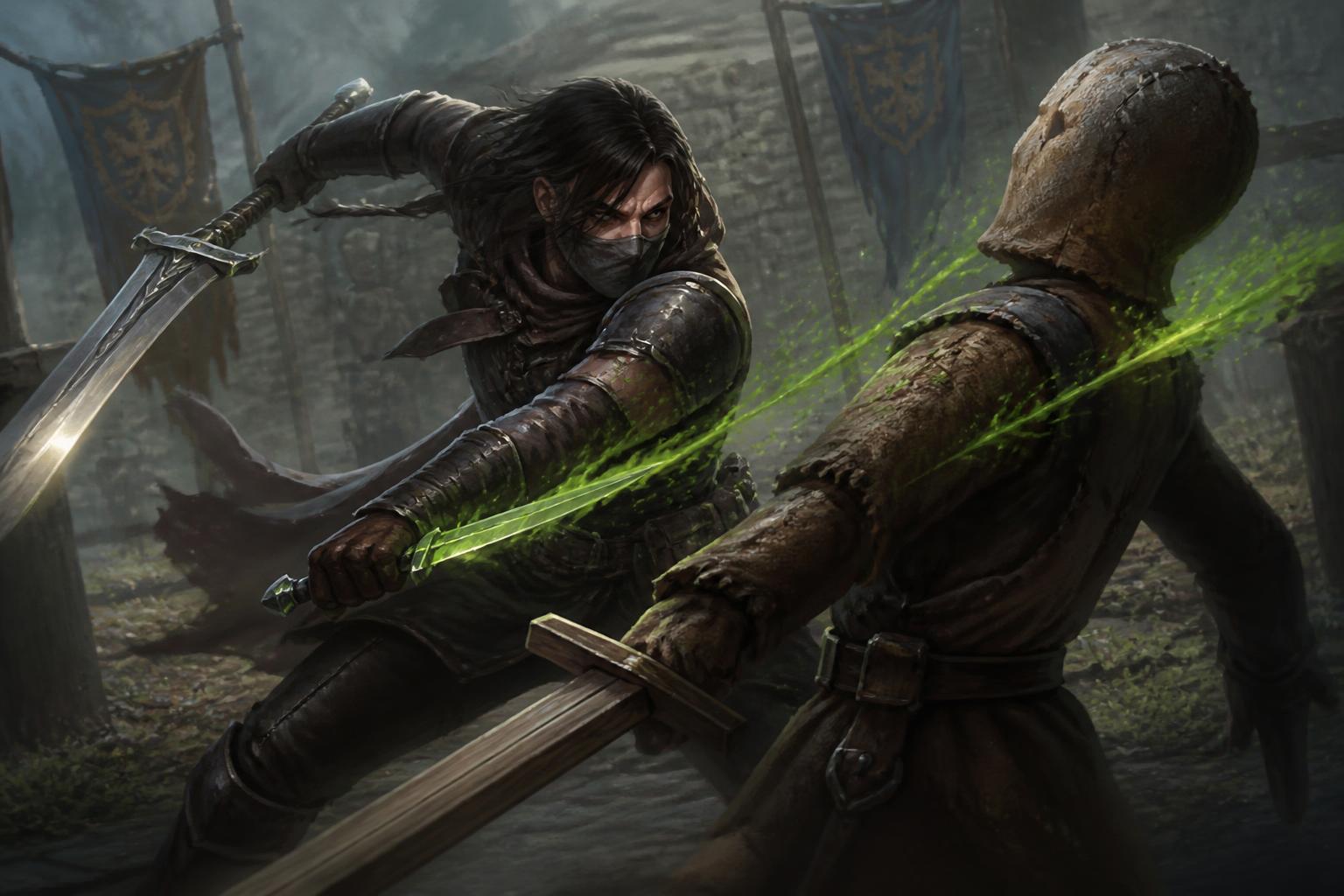
Weapon skill training is another practical reason to keep a fast weapon. More frequent attacks create more opportunities for skill increases, making a quick training weapon useful even when it is not your preferred combat weapon.
Intellect also increases the rate of weapon skill improvement. A temporary training set can therefore be useful, provided it does not leave your character unable to survive the enemies used for practice.
- Equip a fast weapon of the type you want to train.
- If dual wielding, use suitable weapons for the skills you intend to improve.
- Add inexpensive Intellect equipment where practical.
- Use affordable eligible attacks to supplement ordinary swings.
- Restore your normal combat equipment after training.
Keep the spending proportional to the task. Preserving WoW Forever gold is more valuable than overpaying for temporary training pieces that will see little further use. There is no need to build an expensive specialist set just to improve a neglected weapon skill.
Take a look at: WoW Forever addon guide covering gear planning and loot decisions
A Simple Checklist for Weapon Upgrades
Before spending World of Warcraft Forever gold on a replacement, work through the same short comparison each time:
- Check overall quality: Compare weapon DPS, damage range, relevant stats, and useful effects.
- Identify your main mechanic: Are you maximizing weapon-damage abilities, queued attacks, or on-hit applications?
- Respect your build: Weapon restrictions and talent interactions can outweigh a preferred speed.
- Account for resources: More frequent attack opportunities are only valuable when you can use them.
- Consider the task: Leveling, tanking, PvP pressure, and skill training can favor different weapons.
For organizing upgrade decisions, a WoW Forever addon guide covering gear planning and loot decisions offers a useful companion to these mechanical comparisons. The goal is to recognize meaningful improvements without buying every small change.
Frequently Asked Questions
Are slow weapons always better?
No. They often suit weapon-damage special attacks, but fast weapons can be useful for next-swing abilities, poison applications, caster pressure, and weapon skill training.
Should a warrior tank always equip the fastest weapon available?
No. Faster swings make Heroic Strike and Cleave opportunities more frequent, but rage availability and overall weapon quality still matter.
Does a faster weapon always trigger more enchants?
No. Speed-adjusted effects can compensate slower weapons with a higher activation chance per hit. Evaluate each effect separately.
Is a fast two-handed weapon worth using on a leveling paladin?
It can be, particularly when it is a substantial upgrade. Consider Seal of Righteousness and compare the complete setup rather than rejecting the item on speed alone.
What helps weapon skill improve faster?
A fast weapon increases attack opportunities, while Intellect improves the rate of skill gains. Use inexpensive training equipment and keep enough combat capability to practice safely.