
WoW Tailbound PTR Preview: Combat, Rewards and Progression Explained
Learn how specializations, tale difficulties and collectible rewards fit together—and which PTR systems still need work.
Overview
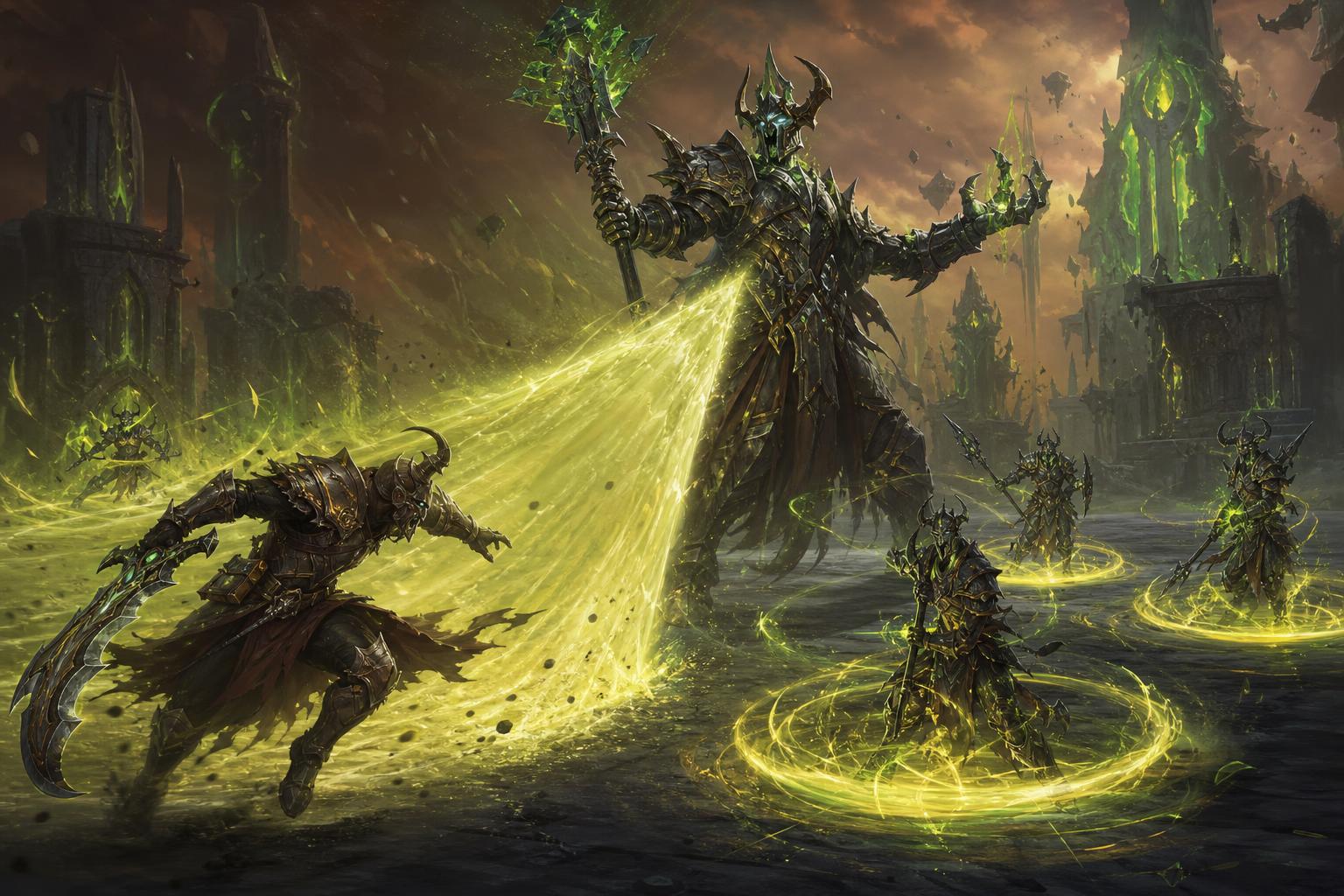
Tailbound brings a story-focused action experience to World of Warcraft, pairing repeatable adventures with three specializations, combat upgrades and collectible rewards. Planned for patch 12.1.7, its public test realm version offers an early look at a mode built around dodging attacks, managing resources and growing stronger through successive encounters.
This preview explains how its combat works, what happens between adventures, and why reward rates and progression behavior should still be treated as provisional. For collectors and players interested in a PvE diversion, the most important distinction is between the mode’s promising core loop and systems that remain unfinished in testing.
What Is Tailbound?
Tailbound is a separate gameplay mode within World of Warcraft centered on story adventures called tales. Rather than emphasizing player-versus-player competition, it challenges players with enemy encounters, boss mechanics, exploration objectives and puzzles.
The structure combines action-oriented combat with progression both inside adventures and back at a central hub. Players defeat enemies, gain temporary powers during tales, and gather resources used to develop their character between outings.
Its appeal is straightforward: learn a relatively compact set of abilities, improve positioning against increasingly dangerous enemies, and work toward cosmetic rewards. That makes it a different kind of activity from preparing a raid character or pushing a Mythic+ keystone.
Three Specializations and a Resource-Driven Combat System
The introduction offers three specializations: Slayer, Witch and Inquisitor. It gradually introduces the selected specialization’s abilities alongside the attacks enemies use. Specialization swapping is part of the mode’s design, allowing players to explore different approaches.
These are Tailbound specializations rather than additions to the standard WoW class roster. Their presence should not be interpreted as new specializations for existing Retail classes.
Health, Energy and Focus
Combat revolves around health and two additional resources with different purposes:
- Health: Determines how much punishment the character can survive.
- Energy: Supports heavier attacks and movement tools such as sprinting. Basic abilities generally help restore it.
- Focus: Fuels especially powerful attacks and can be replenished through potions or certain traits.
The shared demand on energy creates a practical decision: spending aggressively on damage can leave fewer resources available for movement. Maintaining enough flexibility to avoid the next mechanic is often more valuable than squeezing in another heavy attack.
Potions found during exploration can provide shields, damage benefits or resource restoration. Their usefulness depends on the situation, so recognizing an approaching dangerous encounter matters as much as collecting every available pickup.
Reading Enemy Attacks
Enemies use ordinary melee attacks alongside telegraphed cones, circles and rings. Boss encounters layer attacks into combinations that require practice rather than simply higher damage output.
A sensible learning approach is to identify each attack’s shape and timing before committing major resources. When multiple mechanics overlap, prioritize a safe position first, then resume attacking. Even an easier difficulty can punish unfamiliarity with a boss’s sequence.
Quillgrave: The Hub Between Adventures
After the introduction, players arrive in Quillgrave, the central hub for entering tales and developing their character. Its visual identity combines familiar architectural influences with a dreamlike backdrop, giving it a distinct atmosphere without abandoning recognizable Warcraft imagery.
The hub brings together several systems:
- Access to additional tales.
- Character customization and power improvements.
- Relic purchases and related progression.
- Potion discovery and development.
- Reward vendors and recurring quests.
Relics are intended to support character empowerment, but many remain unfinished or represented by placeholders in the PTR build. Consequently, detailed build recommendations would be premature. The same caution applies to potion progression where descriptions or interactions are not yet sufficiently clear.
Tales, Difficulty Levels and Run Progression
The test version presents four tales, each with four difficulty settings, although access to the final adventure has encountered progression problems. The visible selection should therefore not be treated as a guarantee that every route is fully playable throughout testing.
Higher difficulties increase enemy damage, introduce additional abilities and place more enemies into encounters. This changes the demands on positioning and resource management rather than merely extending enemy health bars.
Growing Stronger During an Adventure
Characters gain levels during tales and receive bonus powers. Defeating enemies therefore contributes to immediate strength as well as broader progression, encouraging players to engage with encounters rather than view every fight as an obstacle between objectives.
There is an important distinction between unlocking something in a progression tree and receiving its benefit during a run. Some ability improvements appear as powers collected during adventures instead of applying immediately when points are assigned. Tooltips do not always communicate that distinction clearly.

Puzzles Break Up the Fighting
Tales also include puzzles involving block placement, mazes and light-based interactions. These provide a change of pace between combat encounters and give exploration a purpose beyond finding another enemy group.
Approach these as separate challenges rather than assuming combat strength will solve everything. Reading the available space or tracing a puzzle’s logic can matter more than character upgrades.
Cosmetic Rewards and Currency Expectations
Tailbound’s reward selection includes transmog, mounts, pets and housing decor. Some offerings include recolored appearances associated with the Trading Post, while specialization-themed sets provide another reason to pursue the mode.
Resources come from several activities, including defeated enemies, completed tales, achievements, tasks, and daily or weekly quests. The PTR also includes a way to exchange adventure earnings at the hub.
However, the relationship between enemy drops, exchange values and shop prices appears unusually generous in testing. Those values should not be used to promise a particular completion time or an easy full-vendor clear at release. Reward tuning is one of the least reliable foundations for planning around an early build.
For collectors managing a WoW gold budget, the useful distinction is that Tailbound’s described reward loop centers on mode-specific earnings. It should not be approached as a demonstrated gold farm, nor should its vendor resources be confused with ordinary money used on the Auction House.
Likewise, there is no established reason here to reserve WoW Retail gold for expensive BoE gear or crafting orders specifically to participate. The progression described revolves around Tailbound’s own combat systems, powers and hub upgrades.
PTR Issues That Affect Planning
Unclear Ultimate and Talent Descriptions
Ultimate abilities can become available through skill progression, but the build does not clearly explain what charges them. Without a reliable description or visible progression indicator, players cannot confidently plan their use around a specific resource-spending pattern.
Stat progression also shows questionable interactions. Critical damage investment, for example, has displayed behavior that makes additional points appear ineffective. That is a reason to inspect actual results rather than assume every displayed upgrade works as intended—not a basis for declaring a permanent stat cap.
Returning to a Tale Can Disrupt Progress
The mode appears designed to support moving between tales while retaining levels and powers. However, returning to the hub and then continuing an adventure can produce mismatched quest states, changed enemies and missing powers.
Until that behavior is resolved, avoid relying on uninterrupted run progress after leaving. Testing shorter sessions and noting what persists can help distinguish permanent character improvements from temporary adventure benefits.
Frequently Asked Questions
Is Tailbound a PvP mode?
Its described focus is PvE: story objectives, enemy encounters, bosses and puzzles rather than direct competition against other players.
Which specializations are available?
The introduction offers Slayer, Witch and Inquisitor. They belong to Tailbound’s gameplay system rather than the standard class specialization roster.
What rewards can players earn?
The PTR reward selection includes transmog appearances, mounts, pets and housing decor. Prices and earning rates remain subject to testing changes.
Can a tale be paused and continued later?
A continuation option exists, but testing has shown problems with retained powers and adventure state. Do not assume a resumed run will preserve everything correctly.
Is Tailbound useful for earning regular gold?
The described loop rewards mode-specific resources and cosmetics. It does not establish a reliable method for farming ordinary Retail currency.