
ARC Raiders Rascal Guide: Amplifications and Mobile ARC Combat
Learn which Rascal amplifications to prioritize, how to fight while sprinting, and when incendiary grenades are worth the trade-off.

Overview
The amplified Rascal offers a distinctive way to fight ARC: keep moving, fire while sprinting, and use faster projectiles to connect more reliably. This guide explains its three amplifications, the Sprinting on Fumes combination, and the practical limits of using constant movement against Bombardiers and other machines.
The central decision is whether to keep the weapon focused on direct projectile damage or add incendiary grenades for damage over time. Understanding that trade-off matters more than simply applying every available upgrade.
What the Rascal Amplifications Change
The Rascal can combine High Velocity, Sprint Shooting, and incendiary grenades. Each addresses a different part of its handling, but the third option introduces compromises that the first two do not.
- High Velocity: Increases projectile velocity by 100% and reduces ADS dispersion by 50%.
- Sprint Shooting: Allows the weapon to fire while the Raider is sprinting.
- Incendiary grenades: Add fire damage over time while reducing direct projectile damage and projectile velocity.
Start by separating handling improvements from damage conversion. Faster projectiles and sprint firing make the weapon easier to use during mobile engagements. Incendiary grenades change how its damage arrives, so they deserve a separate evaluation rather than an automatic upgrade recommendation.
Prioritize High Velocity and Sprint Shooting
High Velocity improves projectile delivery
The Rascal's slow projectiles can make moving or airborne targets awkward to hit. High Velocity directly addresses that weakness. Faster travel reduces the amount of movement a target can make between firing and impact, while reduced ADS dispersion helps aimed shots land more consistently.
This does not make every shot guaranteed. Target movement, aim, and impact location still matter. However, it makes the launcher more manageable against machines such as Hornets and Rocketeers, where a missed projectile can extend an already dangerous engagement.
Sprint Shooting changes your combat rhythm
Sprint Shooting lets the Rascal maintain offensive pressure without repeatedly stopping to fire. Instead of alternating between movement and attacks, a Raider can reposition and shoot together.
The adjustment is partly mechanical: aiming while sprinting feels different from firing while stationary. Practice on manageable targets before relying on the combination against a large machine. Movement only helps if shots still connect and the route ahead remains usable.
For players budgeting ARC Raiders materials, these two amplifications provide a clear starting point. They address projectile handling and mobility before committing resources to a damage-over-time variation.
Combine Sprint Shooting with Sprinting on Fumes
Sprinting on Fumes complements the Rascal's mobile firing style by allowing sustained sprinting when stamina is exhausted. Together, the skill and amplification support extended movement while continuing to attack.
The important limitation is what happens when movement breaks. Taking a hit can interrupt the sprinting rhythm, leaving a Raider with little stamina available for recovery. The combination is therefore strongest when it prevents damage, not when it is expected to absorb mistakes.
- Prepare healing and stamina support before starting a demanding fight.
- Choose a route that allows repeated changes of direction.
- Watch for additional ARC that can interrupt movement.
- If a hit breaks the rhythm, recover before trying to resume sustained sprint fire.
A large stamina commitment is not the same as a defensive guarantee. Avoid chasing damage when a reset would preserve the loadout and its remaining supplies.
How to Fight Bombardiers with the Amplified Rascal
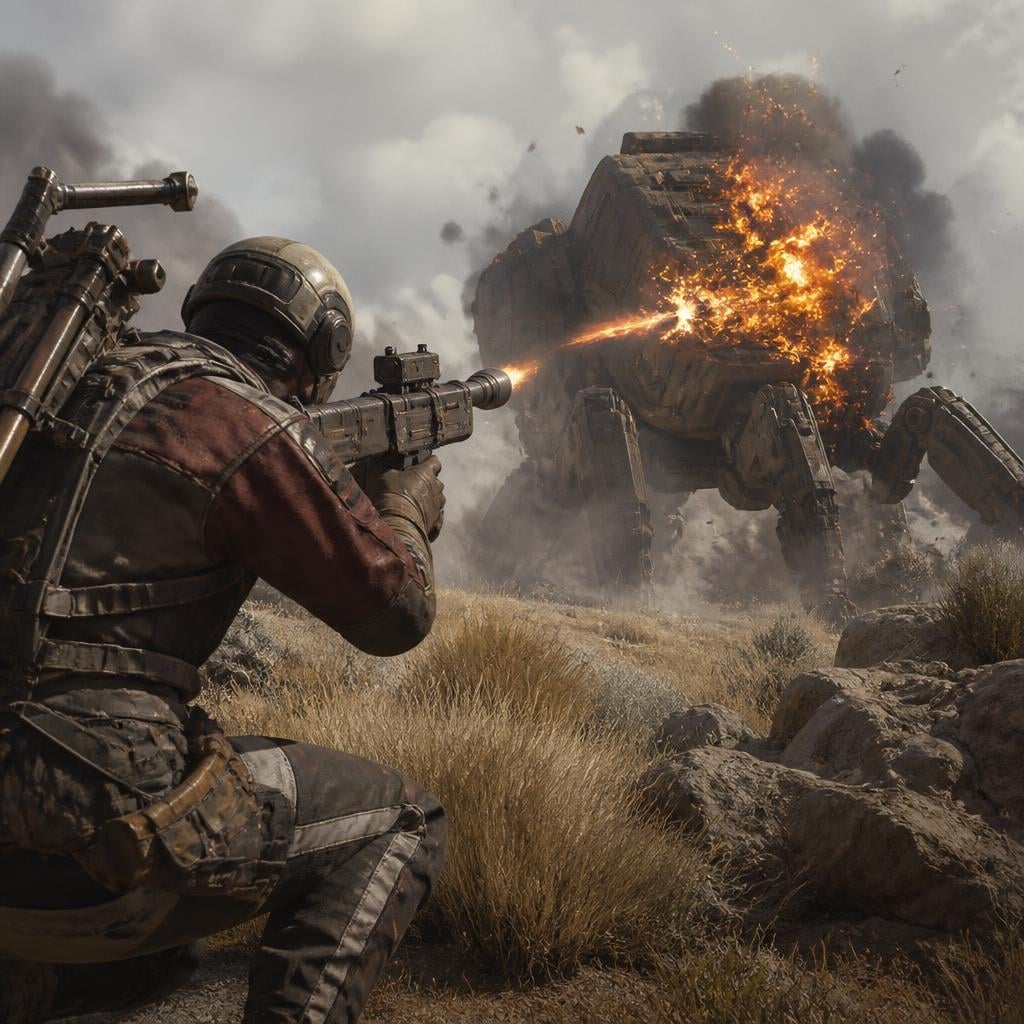
Bombardiers are the clearest use case for this setup. Sprint Shooting allows a Raider to fire while moving laterally, and Sprinting on Fumes helps sustain that movement through a longer encounter.
Use controlled lateral movement
Move side to side while keeping the Bombardier in view and continuing to fire. The goal is to avoid remaining at the location its attacks are threatening, without sacrificing every opportunity to deal damage.
Do not turn this into a fixed, automatic pattern. Bombardiers can still connect, and a successful dodge on one volley does not guarantee safety against the next. Read incoming attacks and adjust direction with enough room to continue moving.
Take a look at: compare amplification upgrade priorities across different weapons
Keep other machines out of the equation
The strategy becomes less reliable when another ARC attacks from outside the main engagement. A hit from a secondary threat can interrupt the sprint and undermine the entire stamina plan.
- Check the surrounding area before committing to the Bombardier.
- Identify nearby threats that could interfere with lateral movement.
- Maintain a route toward cover rather than circling without an exit.
- Break off to heal if damage leaves you unable to sustain the pattern.
This is a mobility-based approach, not an invulnerability loop. Its value comes from combining continued fire with successful avoidance.
Using the Rascal Against Other ARC
Hornets and Rocketeers
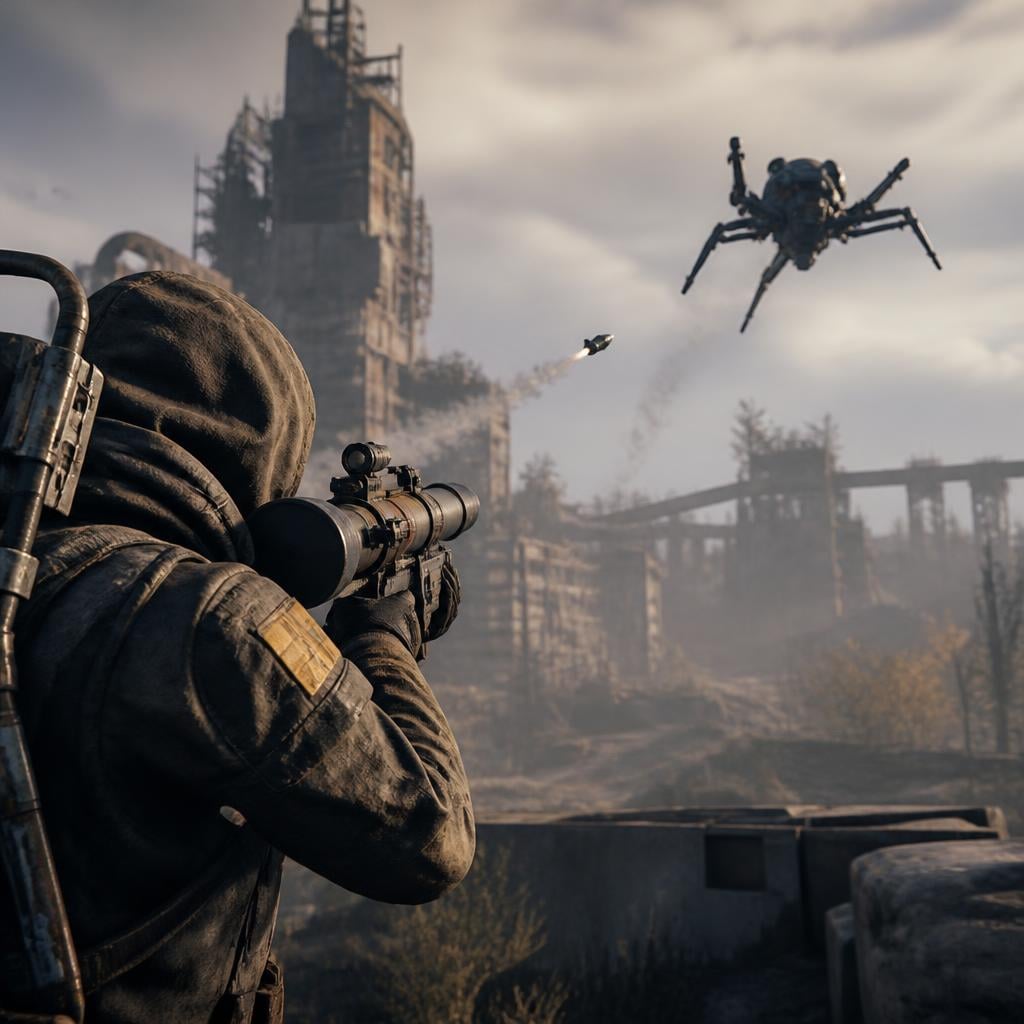
High Velocity makes airborne targets more practical to engage, while Sprint Shooting allows repositioning during the attack. Against a Rocketeer, however, mobility should not become an excuse to rush directly toward it. Keep tracking its attacks and leave room to recover after taking damage.
Against a Hornet, the same combination supports movement around the target while firing. The priority remains controlled aim: sprinting continuously is not useful if it turns every shot into a miss.
Surveyors and mixed encounters
Sprint Shooting also helps when pursuing a Surveyor that is trying to escape. Being able to fire during the chase removes the need to stop for every attack.
Keep the pursuit proportional to the risk. Following one target into additional machines can turn a straightforward chase into a fight with no safe recovery route. This matters especially during loot runs, when protecting carried resources may be more valuable than securing another kill.
Are Incendiary Grenades Worth Adding?
Incendiary grenades reduce the Rascal's displayed direct damage substantially, approaching half in the demonstrated upgrade comparison. They also reduce projectile velocity. In exchange, fire can continue dealing damage after the initial hit.
That makes a simple comparison of individual damage numbers misleading. Impact location changes the result, and damage over time changes when the full benefit appears. A stronger-looking hit does not establish that one configuration will always outperform the other.
Fire damage does not stack
Repeated incendiary hits do not stack separate fire damage effects. Do not assume rapid follow-up shots will multiply the burn. This limits the value of treating incendiary grenades as an uncomplicated damage upgrade.
Choose them when damage over time suits the encounter and you are comfortable with weaker direct impacts. Keep the High Velocity and Sprint Shooting pairing without the fire conversion when predictable projectile damage is the priority.
All three amplifications can be used together, but compatibility does not mean every player needs all three. Test the handling and damage rhythm before investing further.
Take a look at: plan skill priorities around your preferred raid playstyle
Rascal or Hullcracker: Choosing a Practical Loadout
The Hullcracker remains the natural comparison for players choosing an explosive weapon against ARC. Its ability to reload all five explosives together is a meaningful convenience, while the Rascal's appeal here is its sprint-firing playstyle.
A quick-reload amplification would suit the Rascal's rhythm, but it is not one of the three options covered by this setup. Plan around the reload the weapon actually has rather than an imagined upgrade.
When managing ARC Raiders coins, consider the full cost of the raid: weapon preparation, ammunition, healing, and replacement risk. The Rascal can suit runs where a player is more comfortable risking it than a fully amplified Hullcracker, but no fixed price advantage should be assumed.
Durability is another maintenance consideration. The weapon can remain usable across multiple raids, but that is not a guarantee of a particular lifespan. Inspect its condition between deployments and budget for repairs alongside other gear upgrades.
FAQ
Which Rascal amplifications should you prioritize?
Start with High Velocity and Sprint Shooting. They improve projectile handling and enable the mobile firing style without the direct-damage trade-off of incendiary grenades.
Does Sprinting on Fumes make Bombardier fights safe?
No. It supports sustained movement, but taking a hit can disrupt the sprint and leave little stamina for recovery. Other ARC can also interrupt the strategy.
Can all three Rascal amplifications be equipped together?
Yes. High Velocity, Sprint Shooting, and incendiary grenades can be combined, though the incendiary option still introduces damage and velocity compromises.
Do incendiary grenades always deal more damage?
No. Results depend on impact location and the contribution of damage over time. Fire damage does not stack, so repeated hits do not simply multiply the burn.
What is the strongest reason to use this setup?
The ability to maintain fire while moving. It is particularly useful against Bombardiers when lateral movement avoids attacks and nearby threats remain under control.